
Urban Intelligence — From Satellite Data to Development Decisions
GeoMine AI turns satellite imagery and geospatial data into continuous urban intelligence: what is changing, where, why, and what should happen next.
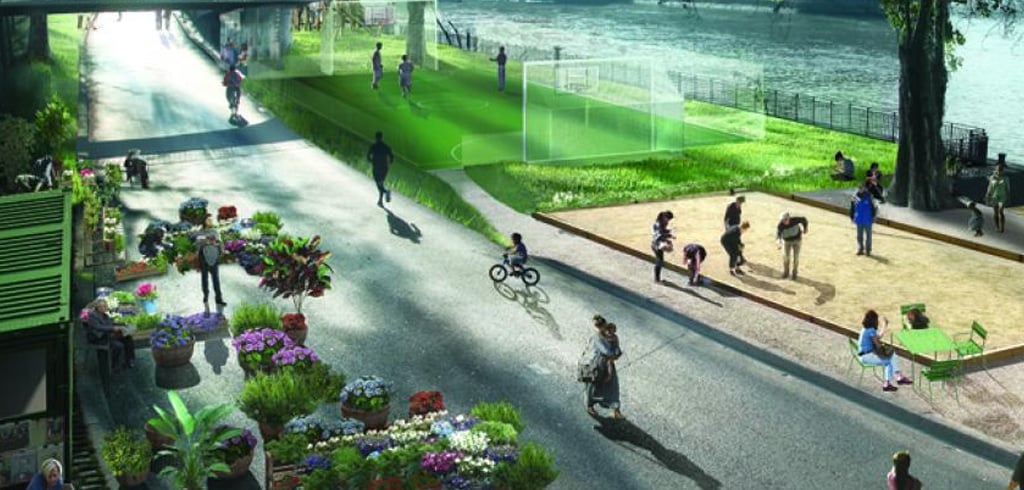
The Workflow Bottleneck
Today, urban insight moves through a slow chain: satellite data → GIS processing → manual analysis → planner interpretation → decision.
The result is planning that is:
- Slow and reactive — changes are found months after they happen.
- Fragmented across departments, formats and tools.
- Labour-intensive and difficult to scale across a whole city.
GeoMine AI replaces this chain with one intelligence engine: heterogeneous data streams in, actionable insight out — continuous, unified, predictive, automated and scalable.

The 5 Layers of Urban Intelligence
GeoMine AI goes beyond static GIS by answering five questions, layer by layer:
- Detect: What exists?
- Monitor: What is changing?
- Predict: What is likely to happen?
- Evaluate: What are the impacts?
- Recommend: What should decision-makers do?
Data fused into the engine: satellite and drone imagery, GIS layers, elevation (DEM), road networks, buildings, land-use, demographics, infrastructure and environmental data.
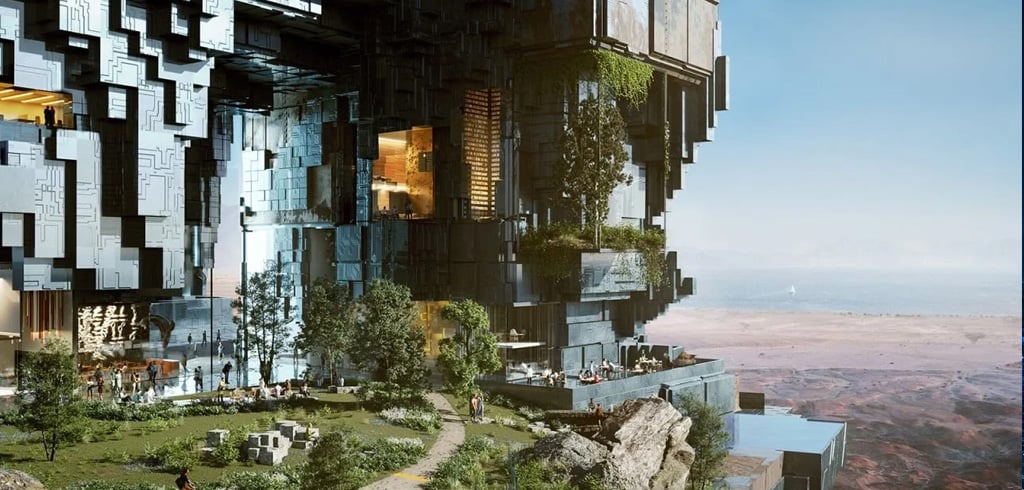
Urban Growth & Land-Use Intelligence
Automated change detection compares multi-temporal satellite imagery over the years.
What it reveals:
- New construction and growth along road corridors.
- Land-use conversion and agricultural encroachment.
- Informal development and abnormal growth hotspots.
- AI-classified urban fabric: residential, commercial, industrial, green and vacant land.
Combined with planning regulations and constraints, it produces an Opportunity & Conflict Map that answers a sharper question: is this land use appropriate?

Infrastructure & Mobility Intelligence
Spatial gap analysis identifies priority intervention zones.
GeoMine AI evaluates:
- Transportation and road networks.
- Utilities: water, electricity and telecom coverage.
- Public facilities: schools, hospitals and parks.
- Underserved zones where growth has outpaced infrastructure.

Urban Heat & Climate Risk
Satellite thermal data and spatial AI map urban heat islands and correlate surface temperature with building density, surface materials and population.
The formula for action:
- High heat + low vegetation + high population = priority green intervention zone.
- Flood risk: elevation + drainage + rainfall.
- Erosion and land instability: terrain + geology + land use.
- Coastal risk: elevation + shoreline change.
All layers roll up into a single Unified Urban Risk Index.
AI-Based Site Selection
Instead of asking “Where can we build?”, GeoMine AI answers “Where should we build?” — sieving accessibility, population, suitability, infrastructure and risk layers.
Optimal location ranking for:
- Schools and hospitals.
- New residential developments.
- Industrial zones and transport hubs.
- Renewable-energy facilities.

The Urban Command Center
Platform intelligence made tangible, actionable and centralised for government and city-development stakeholders.
One dashboard to track:
- Urban growth and new construction area.
- Green-area change and heat risk.
- Infrastructure gaps and risk zones.
- Development opportunities and expansion fronts.
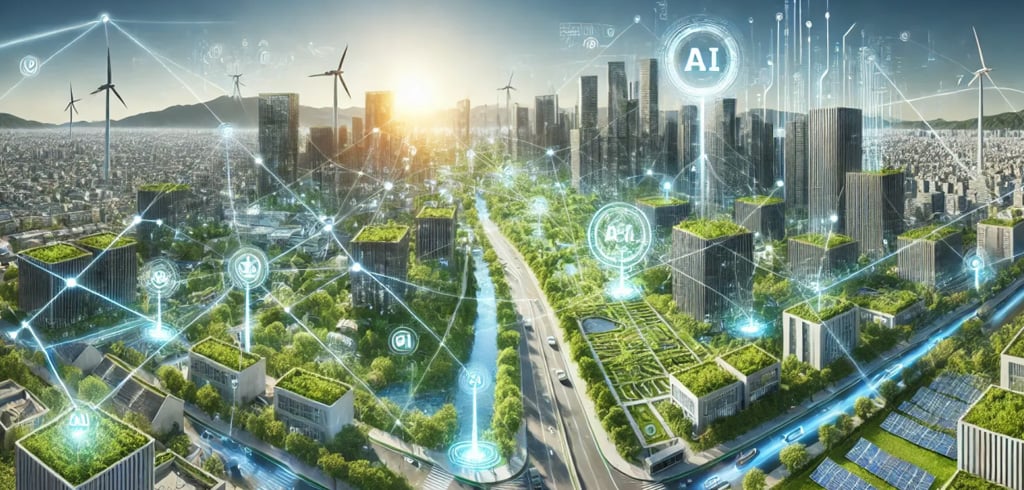
Our Roadmap: Urban Digital Twin
The next step for GeoMine AI is scenario planning: test the city before building the city.
The evolution:
- 2D GIS → 3D urban model → AI analytics → simulation → scenario planning.
- Evaluate future population stress, road demand, environmental impact and accessibility before capital is deployed.
 The Evolution of Spatial Intelligence
Traditional GIS shows what is happening. GeoMine AI explains what is happening. Predictive GeoMine AI anticipates what will happen. Urban Intelligence recommends what should happen next.
Empowering decision-makers to build smarter, resilient and sustainable cities.
Start with a Pilot on Your City or Project
Tell us about your area of interest and we will propose a focused urban-intelligence pilot.